

Not every tired slab needs a new decorative surface. If your concrete is structurally sound but grey, blotchy, stained or chalky (the standard condition of unsealed Coast concrete after a decade or three of salt air), grinding, recolouring and sealing brings it back for the least money of anything we offer. No overlay, no coating build-up: just the concrete you already have, cleaned up, colour-corrected and properly protected.
All work is arranged through independent local contractors who work on weathered Central Coast concrete week in, week out.
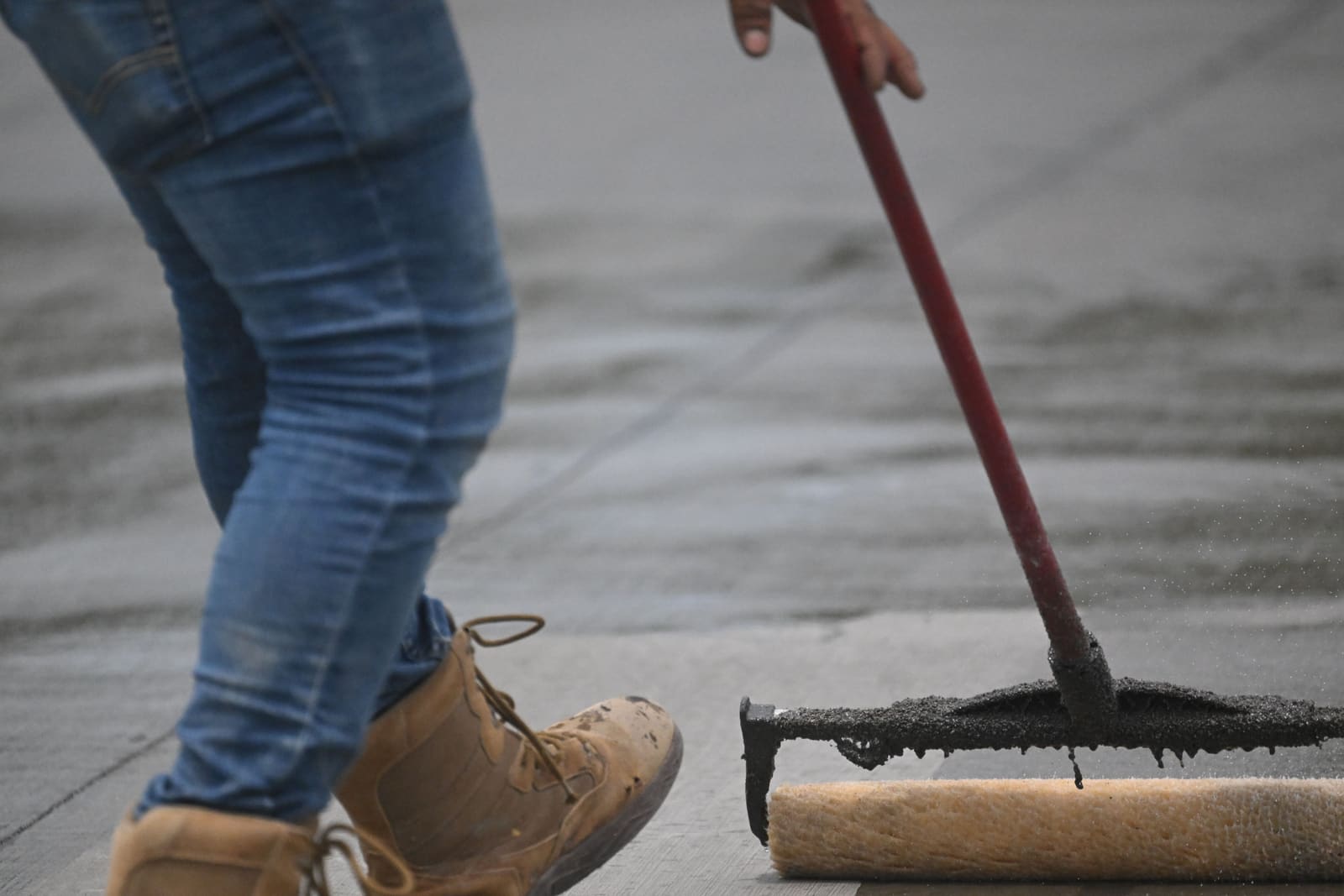
AI-generated illustrative example of the type of work, not a photo of a completed job.
What grinding, recolouring and sealing involves
These are three separate treatments that are often combined, so it helps to know what each one does:
Grinding
A diamond grinder mechanically abrades the top of the slab. Depending on grit sequence and depth, grinding removes old paint, failed sealer, glue, surface stains and trip-hazard lippage between panels, or goes deeper to expose the stone aggregate for a polished-aggregate look. Grinders run with vacuum dust extraction, so the process is far cleaner than most people expect.
Recolouring
Weathered concrete rarely fades evenly: you get pale traffic lanes, dark drip lines under trees and blotches where furniture sat. Recolouring evens this out using penetrating concrete stains or tinted sealers, which carry pigment in the sealer itself. The result is a refreshed, uniform colour that still reads as concrete. If you want pattern, stencils and multiple colours, that’s spray-on concrete territory instead.
Sealing
Sealing is the step that makes the rest last, and on the Central Coast it’s the step that matters most: salt-laden air, sea mist and humidity break down bargain acrylic sealers noticeably faster than inland conditions do. Contractors here choose between:
- Penetrating sealers (silane/siloxane types) that soak in and repel water and salts without changing the look: good for exposed aggregate and surfaces that must keep maximum natural grip.
- Film-forming sealers (quality acrylics and polyurethanes) that sit on the surface, deepen colour, add sheen from matt through to gloss, and carry the tint in recoloured work. Anti-slip additive can be included where sheen and grip need balancing.
Not sure which finish? Pick your surface in the finish selector and compare systems side by side: slip resistance, upkeep, and what each one can hide. Choosing there pre-fills your enquiry.
Concrete floor levelling: lippage, low spots and poor falls
Concrete floor levelling corrects the shape of a slab rather than its appearance, and it comes up on the Central Coast in two quite different situations: uneven joints outdoors, and floors that sit out of level indoors. Both are handled with the same machinery and crews as grinding and sealing, which is why they belong on this page.
Grinding out lippage between panels
Where slab panels have shifted, most often because a tree root has lifted one side of a path or driveway joint, one panel ends up sitting proud of its neighbour. That step is a trip hazard, and it will telegraph straight through any coating laid over the top of it. Grinding is the usual fix: the high edge is taken down and feathered into the panels either side so the joint reads flat underfoot, using the same dust-extracted equipment described above.
There is a limit to it. Past a certain height difference, grinding stops being sensible, because taking that much off exposes the aggregate and thins the concrete cover over the reinforcement. At that point the honest answer is that the panel needs cutting out and re-pouring rather than levelling, and an inspection will say so rather than grind a slab thin to save a conversation.
Self-levelling underlayments for low spots and ponding
Indoors and on covered slabs, the problem is usually flatness rather than height: a garage floor that falls the wrong way, a patio where water sits in the same puddle for two days after rain, a laundry or shed slab poured slightly out of level. The standard answer is a self-levelling underlayment, a pumpable cement-based compound that finds its own flat plane across the slab.
It is a preparation step, not a finish. It corrects the shape underneath so the overlay, coating or decorative surface that follows performs the way it is meant to, which matters most under epoxy garage floors, where a low spot shows up as a visible pool of gloss. Our guide to self-levelling concrete overlays covers where they work, where they cannot help, and what has to be sorted out before one goes down.
Levelling is almost always quoted as part of a larger job rather than on its own, because a levelled slab still needs a finish over it. If your enquiry is really about a floor that is out of level, say so on the form: it changes the preparation line in a quote significantly, and it is far better established before a contractor arrives than after.
Is grinding and sealing the right fix for my concrete?
Central Coast Concrete Revival concrete grinding and sealing suits slabs that are structurally sound but weathered, faded, stained or dull, including exposed aggregate driveways that have gone porous and old paint or sealer needing removal. Widespread cracking, spalling or drummy patches point to driveway resurfacing instead, and an honest inspection recommends the cheaper option whenever it genuinely applies.
- Your slab is sound but ugly: no major cracking or movement, just decades of weathering.
- Your exposed aggregate driveway has gone dull and porous and needs resealing before it starts shedding stones.
- Old paint, sealer or carpet glue needs removing (grinding is also the standard prep before our epoxy garage floor systems).
- Panel edges have created trip lips on paths: common where tree roots have nudged old paths around Gosford’s leafier streets.
- Your spray-on or resurfaced finish from years back is fine, but the sealer has worn through.
- You want the honed or exposed-stone look on a patio or alfresco slab rather than a coating.
If the surface itself is failing (widespread cracking, spalling, drummy patches) grinding and sealing would only tidy up a deteriorating slab. That’s when driveway resurfacing is the better spend, and we’ll say so at inspection rather than sell you the cheaper wrong answer.
How a job runs
- First contact. Send the quote form with daylight photos: ideally after rain if staining is your issue, because wet photos show contractors a lot.
- Site inspection. An independent local contractor checks the slab is sound, identifies what’s on it now (old sealers react differently to solvent testing) and often does a small test patch so you can see the recoloured, sealed result before committing.
- Formal written quote. Scope, sealer system, colour and number of coats, all itemised. Site-page pricing is a guide only.
- Set-up and grinding. Grinders need power and room to work; steep driveways around the Gosford and Terrigal hills just take more planning and hand edge work. Dust is captured at the machine.
- Wash-down and stain treatment. Slurry and wash water are contained and disposed of responsibly rather than hosed toward the gutter: stormwater here drains to the lake systems and beaches, and rules on what can enter stormwater apply. Oil spots get degreased or poulticed.
- Recolouring. Stain or tinted sealer applied evenly, blended at edges and joints.
- Sealing and cure. Usually two coats, timed around humidity and dew: sealing into a damp Coast evening traps moisture and blushes the finish white, so reputable applicators won’t do it. Foot traffic typically within a day, vehicles after several days, product depending.
How much does concrete grinding and sealing cost on the Central Coast?
Central Coast Concrete Revival concrete grinding and sealing typically costs $800 to $2,000 for a straightforward reseal of an existing driveway or patio, rising for a full grind, recolour and seal on a larger area. Square metres, what has to be removed first, grind depth and the sealer system chosen all move the price, confirmed only after a site inspection and formal written quote.
- Square metres, as with all concrete work.
- What has to come off: bare weathered concrete is quick; thick paint or old sealer layers take multiple grinding passes.
- Depth of grind: a light clean-up costs less than grinding down to exposed aggregate.
- Sealer system: penetrating and premium polyurethane sealers cost more than standard acrylics, and tinted systems take extra care to lay off evenly.
- Access and slope: steep or terraced sites slow the machinery down.
Indicative price guide
These are indicative guide figures only, always confirmed after a site inspection and formal quote.
| Job | Indicative range (guide only) |
|---|---|
| Reseal existing driveway or patio (clear, minimal prep) | $800-$2,000 |
| Grind, recolour and seal a path or patio | $1,500-$3,500 |
| Grind, recolour and seal a single/double driveway | $2,000-$5,000 |
| Grind to exposed aggregate and seal, alfresco area | $2,500-$6,000+ |
The concrete resurfacing cost guide explains how these figures compare with full resurfacing, and how long resurfacing lasts covers reseal cycles and lifespan.
Included versus extra
Standard inclusions:
- Diamond grinding with dust extraction, to the depth quoted
- High-pressure clean and degrease
- Contained slurry and washout disposal
- Recolouring coat(s) and two coats of coastal-grade sealer as quoted
- A written note of the sealer used, so future resealing matches
Quoted separately where required:
- Stripping heavy coatings, mastics or membrane remnants
- Crack injection or patch repairs beyond hairline filling
- Poulticing deep-set oil stains
- Anti-slip additive or specialist matt finishes
- Multiple test patches across large multi-toned areas
Related services and service area
Step up to spray-on concrete for pattern and colour change, or epoxy garage floors for interior slabs. We arrange grind-and-seal work right across the Coast, including the hillside driveways of Gosford, salt-exposed frontages at Terrigal and the older beach-side blocks around The Entrance. Grinding and sealing is the lightest-touch option in our wider range of concrete resurfacing on the Central Coast.
Grinding and sealing FAQs
How often does concrete need resealing on the Central Coast?
More often than the tin suggests. Coastal UV and salt shorten sealer life, so film-forming sealers here typically want renewing every two to four years depending on exposure and traffic, while penetrating sealers generally go longer. A reseal is quick and cheap compared with letting the surface go bare again.
Will grinding get rid of oil stains?
Surface staining, usually yes. Oil that has soaked deep into porous old concrete may only lighten, even with poulticing: the inspection will tell you which yours is before you spend money. For the full method on what actually lifts oil versus what just wastes a weekend, see our oil stains removal guide.
Can you make my concrete a completely different colour?
Recolouring works best refreshing or moderately shifting the existing tone: evening out blotches, deepening a faded colour, taking grey to a warmer stone shade. For a dramatic change or patterns, spray-on is the right tool.
Is sealed concrete slippery?
Gloss film-forming sealers can reduce wet grip, which is why anti-slip additives and matt or penetrating options exist. Slip-resistant results are achievable and are what we’d recommend for sloped driveways and pool-adjacent paths, though no sealer makes a surface slip-proof.
What’s the white haze on my previously sealed driveway?
Usually either sealer “blush” (moisture trapped under a coat applied in damp conditions) or efflorescence: salts migrating out of the concrete, which coastal humidity encourages. Both are fixable, but the treatment differs: one more reason for an inspection before anyone quotes.
Do I need council approval for this work?
Grinding and sealing existing residential concrete doesn’t normally involve approvals, but rules vary: if your driveway crosses the council footpath reserve or the property has heritage constraints, check with Central Coast Council first. NSW contractor licensing thresholds also apply by job value and type; NSW Fair Trading has current details.
Ready to see what a clean-up and seal can do?
If your concrete is sound underneath the grime, this is the fastest, cheapest way we know to make it look after itself again. Get a fast quote: suburb, surface and a couple of photos is all we need to start.